I've spent years developing red light therapy devices, and lately I've been looking more closely at how PEMF therapy and red light therapy for dogs are being marketed. What's interesting to me is how many companies are taking technologies that have been used in human and animal wellness for years, repackaging them as specialized pet products, and charging a premium.
Both technologies have earned their place in animal care, but they work differently. And there's one important reason I find PEMF particularly well suited to our four-legged friends.
How PEMF and Red Light Therapy Work
Red light therapy, also known as photobiomodulation (PBM), delivers specific wavelengths of red and near-infrared light that interact with cellular processes involved in energy production, inflammation, and tissue repair. It's widely used in human wellness and veterinary rehabilitation, with applications ranging from skin and wound care to joint discomfort and recovery.
PEMF, or pulsed electromagnetic field therapy, uses coils to generate changing magnetic fields that pass through fur and biological tissue. It's been used in equine care and rehabilitation for decades, particularly among horse owners, trainers, and practitioners working with animals recovering from physical strain or managing ongoing joint and muscle concerns.
Anyone familiar with the equestrian world knows PEMF isn't some new pet wellness invention. It's already part of many established recovery routines, and clinical studies in dogs have documented improvements in osteoarthritis-related pain and certain measures of mobility. What I find especially useful is that PEMF doesn't depend on light reaching the skin, which brings us to one of the biggest differences between these two technologies.
Why PEMF Makes So Much Sense for Animals
Fur presents a challenge for red light therapy that we don't encounter to the same extent with people.
A 2020 study involving 47 dogs examined how coat pigmentation, wavelength, and shaving affected light transmission. Researchers found that darker pigmentation significantly reduced the amount of light passing through the coat and tissue. That doesn't make red light therapy ineffective for dogs, but it does mean the amount of light produced by a device isn't necessarily the amount reaching the intended area.
PEMF has a clear practical advantage here. Magnetic fields aren't absorbed by fur or affected by coat color the way light is. Whether you're working with a short-haired dog, a thick-coated retriever, or a horse, you don't have the same problem of trying to deliver light through layers of hair. Coil placement and field strength still matter, of course, but fur itself isn't getting in the way.
For older animals dealing with stiff joints or mobility problems, that's a meaningful difference, and one of the reasons I'm particularly interested in PEMF for animal wellness.
What Has PEMF Actually Accomplished in Veterinary Care?
PEMF has a longstanding presence in animal rehabilitation, particularly in the equine industry, where it's used in recovery routines and musculoskeletal care.
A 2025 clinical trial involving 20 dogs with hip osteoarthritis documented reductions in pain scores using PEMF at 50 Hz and 40 Gauss. Another placebo-controlled study involving 21 dogs reported improvements in certain objective gait measurements following PEMF treatment.
Red light therapy has its own substantial history in veterinary medicine. A 2022 study involving 20 dogs with hip osteoarthritis reported improvements in pain and mobility following therapeutic laser treatment. Both technologies have a long history in animal rehabilitation, each offering its own advantages.
So Which Would I Choose for My Dog?
For superficial skin concerns or targeted light therapy, I can certainly see the value in red and near-infrared LEDs. But for a dog with a thick coat, or an older animal dealing with joint stiffness and mobility concerns, PEMF would be very high on my list.
And since I'm a firm believer in getting more use out of the technology we invest in, I'd also question why we need to choose only one.
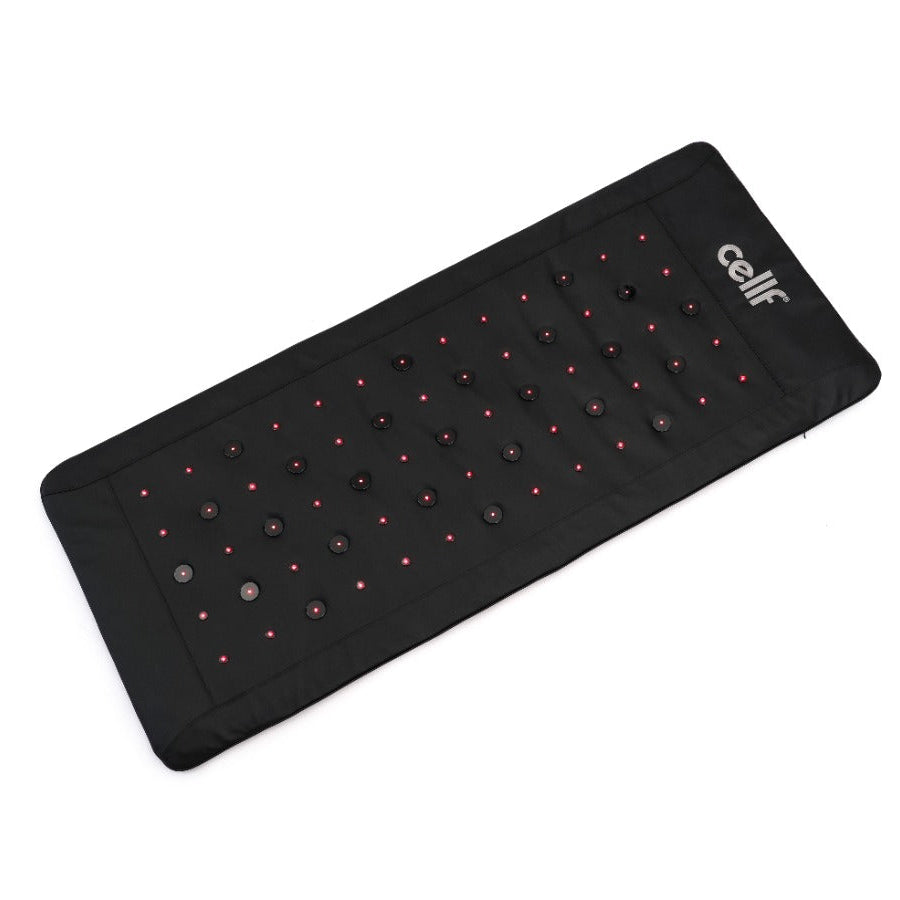
Our CELLF Multi-Therapy Mat combines 25 distributed PEMF coils, 660 nm red and 850 nm near-infrared LEDs, and infrared heat in one full-body mat. The technologies work independently, so you're not committed to using all three at once.
I love that kind of versatility. Rather than investing in several separate devices, you have different technologies available depending on what you need. CELLF was designed for people, so appropriate animal-use settings and safety guidance would need to be established before recommending it for pets, but the principle of investing in equipment with multiple applications makes perfect sense to me.
Do You Really Need a Separate Pet Wellness Device?
This is what bothers me about some of the marketing we're seeing. Consumers are being encouraged to buy specialized pet versions of technologies they may already own, often without any clear explanation of what makes the pet product fundamentally different.
There are perfectly good reasons to design equipment around an animal's anatomy, comfort, and safety. But putting the same underlying technology into a dog-shaped vest or giving it a pet-specific name doesn't automatically make it better.
I'd rather see people understand what they're buying, compare the actual specifications, and invest in equipment they'll get the most use out of. If a mat or wrap has been evaluated for safe use with both people and animals, there's a very good argument for sharing one versatile device instead of purchasing separate products.
Neither PEMF nor red light therapy replaces proper veterinary care, particularly when an animal has an injury requiring medical intervention. But both have meaningful applications in veterinary rehabilitation, and pet owners deserve to know how these technologies work without being convinced they need an entirely different collection of expensive equipment.
Are Pet PEMF and Red Light Therapy Devices FDA Cleared?
Here's something most pet owners probably don't realize: the FDA does not require 510(k) clearance or premarket approval for medical devices intended exclusively for animals. That includes veterinary PEMF and red light therapy devices.
A company can sell a $500 pet therapy wand or a $2,000 PEMF blanket without first submitting that device to the FDA for clearance. That doesn't automatically mean there's anything wrong with the product, but consumers shouldn't assume that a veterinary endorsement, an expensive price tag, or an impressive technical description comes with FDA verification of its performance.
Manufacturers are still responsible for product safety, effectiveness, and labeling, and genuine laser products must comply with applicable radiation-safety regulations. But the FDA isn't evaluating these veterinary devices through the same premarket clearance process required for many human medical devices.
I find that particularly interesting when manufacturers are charging a premium for technology that may be very similar to what's already available in human wellness products. Pet-specific branding isn't a regulatory credential, and a higher price isn't proof of better technology. Consumers should be comparing actual specifications and asking what makes a product genuinely different, rather than assuming they're getting something more advanced simply because it's designed for animals.
Source: FDA — How FDA Regulates Animal Devices
Frequently Asked Questions
Is PEMF or red light therapy better for dogs with arthritis?
Both PEMF and red light therapy have been used in veterinary rehabilitation, and clinical studies have documented improvements in pain and mobility measures in dogs with osteoarthritis. Neither has been established as universally superior. For dogs with thick or dark coats, PEMF has a practical advantage because magnetic fields aren't blocked by fur the way light can be. Treatment decisions should still account for the dog's condition and veterinary care plan.
Does PEMF therapy work through thick fur?
Yes. PEMF uses changing magnetic fields rather than light, so thick or dark fur doesn't create the same absorption problem encountered with red and near-infrared light therapy. That's one reason PEMF is particularly practical for furry animals. The magnetic field delivered to the body still depends on coil positioning, distance, and the device's output.
Can I use a human PEMF mat on my dog?
Almost certainly, if the mat's design and settings are appropriate for your dog. Human and veterinary PEMF applications rely on the same electromagnetic principles, and a separate pet-branded device isn't inherently necessary. The important distinction is the suitability of the equipment, not whether it's marketed to people or pets.
Are pet red light therapy and PEMF devices FDA approved?
The FDA does not require 510(k) clearance or premarket approval for devices intended exclusively for animals. That means a pet PEMF mat or red light therapy device can be marketed without undergoing the premarket review required for many human medical devices. Manufacturers remain responsible for safety, effectiveness, and labeling, but a product being sold for veterinary use shouldn't be mistaken for evidence of FDA approval or clinical validation.
Explore the CELLF Multi-Therapy Mat