In short: If you want to improve focus, memory and mental energy, the most reliable route is to work with how your brain already changes. Your brain physically rewires based on what you repeat, at any age. That's neuroplasticity, and it runs on a few conditions you can set every day: focused attention in blocks of about 90 minutes, a morning that uses light, movement and a little cold to raise alertness, real food, and sleep afterwards, which is when learning actually gets stored. In a 2011 trial, a year of brisk walking three times a week grew the memory centre of the brain by about 2% in adults in their sixties and seventies. In a 2002 study, people who learned a new skill and then slept performed it about 20% faster the next day; the same hours spent awake gave almost nothing. The routine below is built from those findings.
In this post: What makes the brain change · Why 90-minute focus blocks work · The morning routine for focus · Why learning sticks in sleep · Food for focus · A one-week experiment · FAQ
Four terms, quickly:
-
Neuroplasticity is the brain's ability to change its own wiring in response to what you do and pay attention to. It continues for life.
-
BDNF (brain-derived neurotrophic factor) is a protein that helps brain cells grow and connect. Exercise raises it.
-
A 90-minute cycle is the natural rise and fall of alertness your brain moves through during the day, the same cycle length that structures sleep.
-
NSDR (non-sleep deep rest) is 10 to 20 minutes of guided rest lying down with eyes closed, such as yoga nidra, used to restore focus and help the brain consolidate what it just learned.
For most of the last century, the story was that you got the brain you had by your mid-twenties and then spent the rest of your life slowly losing it. That turned out to be wrong. Your brain keeps rewiring itself for as long as you live. Connections you use get stronger. Connections you don't use fade. New cells grow in the memory centre well into old age. The scientific word for this is neuroplasticity, and the practical meaning is simple: whatever you repeat, you become better at, and that includes focus, calm and learning.
The catch is that plasticity doesn't care whether what you repeat is useful. Scrolling trains scrolling. Switching tabs every two minutes trains a short attention span. The same machinery that lets you learn a language in your forties also lets you forget how to read a book. So the goal is to give your brain instructions on purpose, and this post is about how.
What makes the brain change
Three things have to be present for the brain to rewire, and they explain almost everything that follows.
Attention. The brain only marks an experience as worth keeping when you're paying close attention to it. The chemical signal for this is acetylcholine, released when you focus hard on one thing. Half-attention, the kind you give a podcast while answering emails, doesn't trigger it.
Urgency or reward. A second signal says this matters. Adrenaline and noradrenaline carry the "this is important" message; dopamine carries "this is working, keep going." They're why you remember things you cared about and forget things you were made to sit through.
Rest afterwards. The rewiring itself doesn't happen while you're working. It happens later, in sleep and in deep rest, when the brain replays the day and decides what to keep. Skip the rest and you've done the hard part for nothing.
Flow, the state where work feels effortless and time disappears, is what it feels like when the first two are present at once: full attention on something that matters, slightly harder than you're used to. You can't force it, and you can set the conditions for it, which is what the rest of this post does.
Why do 90-minute focus blocks work?
Your brain doesn't run at a steady level all day. It moves through cycles of roughly 90 minutes, the same cycles that structure your sleep, with alertness rising for the first part and tailing off toward the end. Trying to focus for four hours straight fights that pattern. Working with it looks like this:
-
Pick one task. Close everything else, phone in another room.
-
Expect the first five to ten minutes to feel bad. That friction is normal and it passes; most people quit right before it does.
-
Work for 60 to 90 minutes, then stop, even if it's going well.
-
Take a real break: walk, stretch, look at something far away, no screen. Ten to twenty minutes.
-
Most people get two good blocks a day, three on an exceptional one. That's where your most important work should go.
Put the first block early, on the thing that matters most, before the day fills with other people's priorities. A clear goal written down the night before makes the block start faster.
What should a morning routine for focus include?
What you do in the first hour sets the chemistry for the rest of the day. Four inputs do most of the work.
Light. Get outside within an hour of waking, without sunglasses, for ten minutes on a bright day or twenty on a grey one. Morning light through the eyes sets your body clock, triggers a healthy rise in cortisol that gives you daytime energy, and starts the countdown to melatonin that night. A window doesn't do it; glass filters out most of what your eyes need.
Movement. Any movement raises alertness, and regular aerobic movement does something more lasting. In a 2011 trial published in PNAS, adults in their sixties and seventies who walked briskly for forty minutes three times a week for a year grew their hippocampus, the brain's memory centre, by about 2%. The comparison group, who did stretching, lost about 1.4% over the same year, which is the normal drift. Walking reversed it. The mechanism is a molecule called BDNF, which exercise releases and which acts like fertiliser for new connections.
Cold. A short blast of cold at the end of a shower, thirty seconds to a minute, raises noradrenaline and dopamine for hours afterwards. The headline study on this used an hour of immersion in 14°C water and saw noradrenaline rise more than fivefold and dopamine more than double; a cold shower gives you a smaller version with none of the misery. Most people find it sharpens attention for the first focus block better than a second coffee does.
Water first, caffeine later. A large glass of water with lemon and a pinch of Celtic or Baja Gold sea salt before anything else. Then wait sixty to ninety minutes before coffee if you can. Caffeine blocks the sleepiness chemical, adenosine; it doesn't remove it. Drink coffee the moment you wake and the adenosine is still there when the caffeine wears off, which is the mid-afternoon crash. Delay it and the morning light and movement clear adenosine for you first.
Why does learning stick in sleep?
This is the part most focus advice leaves out. You don't learn during the lesson; you learn during the night after it.
In a 2002 study in Neuron, people learned a finger-tapping sequence and were tested again twelve hours later. Those who spent the twelve hours awake improved by about 2 to 4%. Those who slept improved by about 20%, with no loss of accuracy. Same practice, same gap, and the only difference was sleep. The brain replays what you worked on during deep sleep and files it where you can find it later.
Two things follow. First, protect the night after any day you learned something that mattered. An early dinner, no screens in the last hour, a dark cool room. Second, use rest during the day too. Non-sleep deep rest (NSDR), which includes yoga nidra and similar guided practices of ten to twenty minutes lying down, gives the brain a short consolidation window after a focus block. It also restores some of the dopamine the block used up, which is why a twenty-minute NSDR after lunch often rescues the afternoon.
If you want to retain something, the sequence is: focus hard on it, stop, rest, sleep. Cramming for hours and sleeping four is the exact reverse.
What should you eat for focus?
The brain is two percent of your body weight and uses about twenty percent of your energy, and it's fussy about the supply. Steady blood sugar is the single biggest factor in whether you can hold attention through a block; the spike-and-crash cycle from refined carbs eaten alone produces the 3pm fog more reliably than anything else. Protein at breakfast, fat and fiber with carbs, and most carbs placed around movement keep the supply even. Omega-3s from oily fish are the raw material for brain cell membranes and for calming inflammation; two servings a week is the floor. The gut makes a large share of the chemicals the brain runs on, so the plant variety and fiber it wants feed your focus as much as your digestion. The full version of this is in our post on why food is information.
Run the experiment on yourself
Pick one week. Change three things and track one.
-
Morning light and water before coffee, every day, even cloudy ones.
-
One 90-minute block before 11am on the most important thing, phone out of the room.
-
A hard stop in the evening: screens off an hour before bed, lights low.
Track a single number: focus quality at the end of your first block, 1 to 5. Note sleep hours alongside it. By day five you'll see which lever moves the number most for you, and that's the one to keep.
Wearables help here as long as you keep them in their place. A sleep score is a mirror, not a boss. If the ring says you slept badly and you feel fine, trust how you feel and work anyway. If you feel wrecked and the ring says 90, you're still wrecked.
The takeaway
Your brain is rewiring right now, in the direction of whatever you're repeating. Give it full attention in short blocks, a morning of light, movement and a little cold, real food, and the sleep it needs to file what you learned. None of this requires willpower all day. It requires setting up the first hour and protecting the last one.
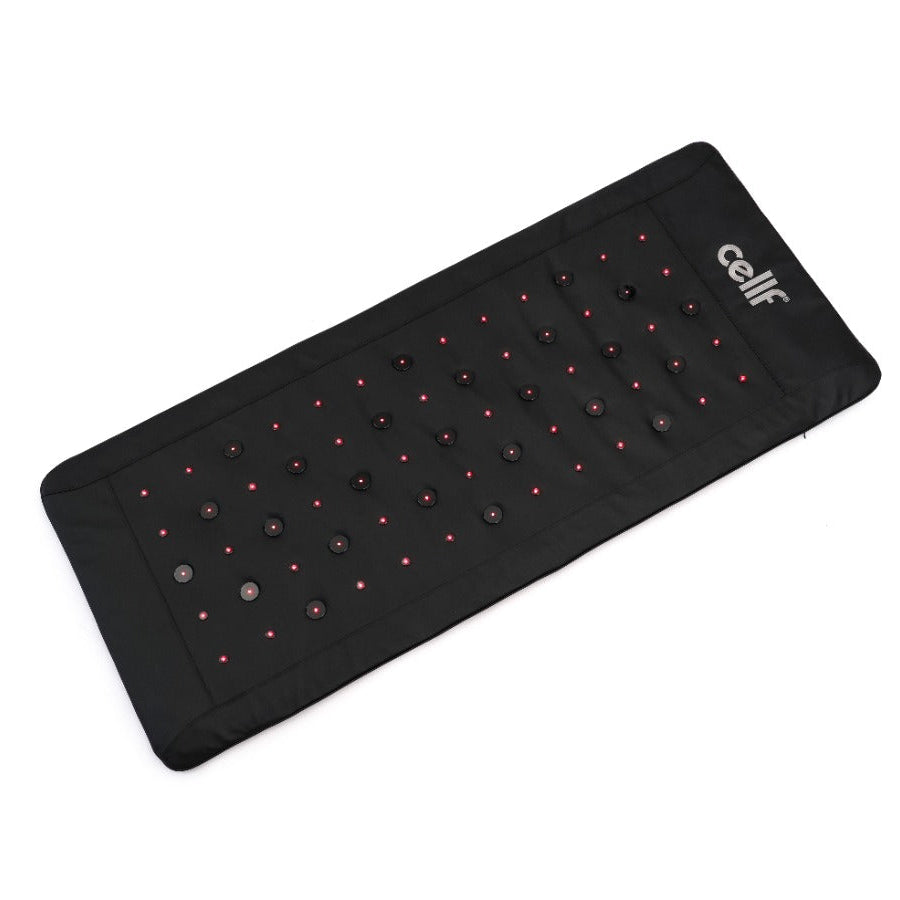
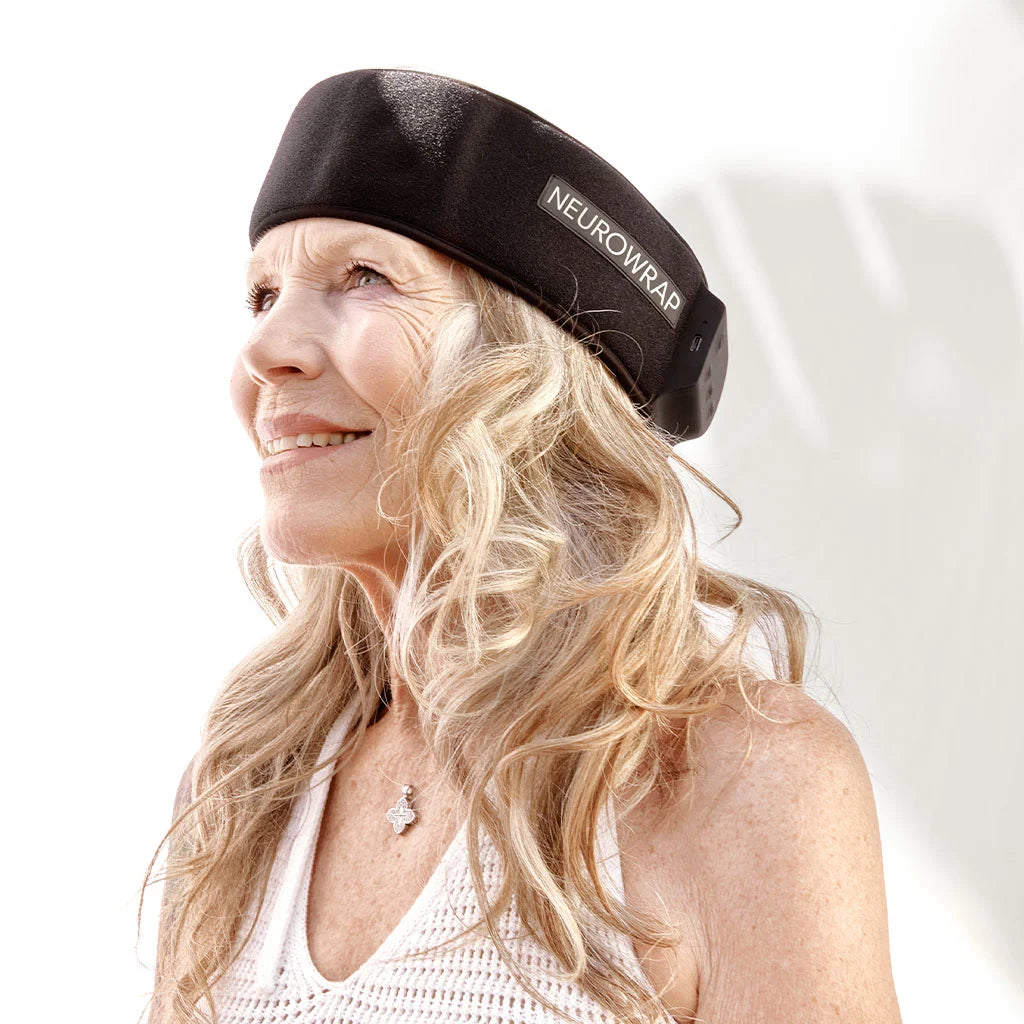
For the evening side, this is where I use my own tools. The NeuroPulse Pro is the device I built for the transition out of the working day: twenty minutes of gentle PEMF and near-infrared light while I read, as the signal to my own nervous system that the thinking is done. On nights when the whole body needs the message, I lie on the Cellf Multi-Therapy Mat instead. Light and frequency work best as the bookends of a day you've already built well.
If you'd like the fuller version of all this, it's the Focus module inside The Wellness Workshop, where it sits alongside light, food, movement, breath and sleep. And if you'd rather have a plan built around your own schedule and your own brain, that's what the Personal Protocol is for.
Questions people ask about this
Can you improve focus and concentration at any age? Yes. Neuroplasticity continues for life. It's faster in youth and still very much present later: in a 2011 trial, adults in their sixties and seventies grew their hippocampus by about 2% with a year of regular walking. The conditions are the same at any age: close attention, something that matters, and rest afterwards.
Why 90-minute focus blocks? The brain's alertness rises and falls in cycles of roughly 90 minutes through the day, the same cycles that structure sleep. A block that matches one cycle, followed by a real break, gets more done than three hours of pushing through. Most people have two good blocks a day.
What is NSDR and does it work? Non-sleep deep rest is ten to twenty minutes of guided rest lying down with eyes closed, like yoga nidra. It gives the brain a short window to consolidate what you just worked on and restores some of the dopamine a focus block uses. It's a practical substitute for a nap when a nap isn't possible.
Does a cold shower really help with focus? A short cold finish raises noradrenaline and dopamine, the chemicals behind alertness and motivation, for an hour or more afterwards. The research used long immersion in cold water; thirty seconds to a minute at the end of a normal shower gives a smaller, useful version.
Why do I forget things I just studied? Because storage happens in sleep, not during study. In a 2002 study, people who slept after learning a new skill performed it about 20% better the next day; those who stayed awake for the same hours barely improved. Study, stop, rest, and protect that night's sleep.
Sources
-
Erickson KI, et al. Exercise training increases size of hippocampus and improves memory. PNAS, 2011;108(7):3017–3022.
-
Walker MP, Brakefield T, Morgan A, Hobson JA, Stickgold R. Practice with sleep makes perfect: sleep-dependent motor skill learning. Neuron, 2002;35(1):205–211.
-
Šrámek P, et al. Human physiological responses to immersion into water of different temperatures. European Journal of Applied Physiology, 2000;81:436–442.
About the author
Jessica Charles is the founder of NuShape and Cellf, two wellness brands built around a simple idea — that restoring cellular health is the foundation of lasting energy, balance, and beauty.
Drawing from years of experience in red-light therapy, infrared heat, and natural recovery technologies, she helps women — and the wellness centers that serve them — bridge the gap between science and daily practice.
Her work focuses on helping the body do what it's designed to do: repair, rebalance, and renew. Through accessible, evidence-based tools like light, heat, and cold, she's seen thousands of women regain energy, stability, and confidence in their own biology.
Jessica believes true wellness isn't about extremes — it's about creating the right conditions for the body to remember how to heal itself.
Closer
The Fine Print (Yes, We Have to Say It)
We read the studies so you don't have to, but sharing research about light, the body, and wellness now comes with a mandatory footnote, thanks to the big tech giants. So here it is: this article is for educational purposes only and is not medical advice. Our devices are wellness tools, not medical devices, and are not intended to diagnose, treat, cure, or prevent any disease. Results vary from person to person. Please check with your healthcare provider before starting anything new, especially if you're pregnant, nursing, managing a health condition, or taking medication. Now go forth, stay curious, and get some good light.
Explore The Wellness Workshop | Get your Personal Protocol | Shop the NeuroPulse Pro | Shop the Cellf Multi-Therapy Mat