Skin, Hair + Body
Wrinkles, acne, scars, hair and body contouring
Wrinkles & fine lines
Smoother skin and denser collagen, measured by ultrasound and skin scanning rather than photographs, against untreated controls. People had red light twice a week for thirty sessions. With 136 volunteers, this is the landmark controlled trial of red light for skin.Wunsch & Matuschka · Photomedicine and Laser Surgery · 2014
Acne
Inflamed spots fell by about three quarters in twelve weeks, a better result than benzoyl peroxide in the same trial. Blue and red light were used together because they do different jobs: blue kills the bacteria in the pore, and red calms the inflammation and quiets the oil gland behind it.Papageorgiou et al · British Journal of Dermatology · 2000
Wound healing
Less swelling, less pain and better-closed wounds after eyelid surgery than with standard care alone. This is where the whole field started, and it's still the most consistent result in it. Light speeds up what a healing wound is already doing: more energy in the repair cells, more blood arriving.Aesthetic Plastic Surgery · 2024
Scar reduction
Flatter, paler, less painful scars six months after thyroid surgery, compared with scars treated with a dummy device. The light started a week after surgery and ran for a month, before a scar had even formed.Lasers in Medical Science · 2022
Psoriasis
Plaques cleared by 60 to 100 percent, averaging around nine tenths, in nine people whose psoriasis had resisted every standard treatment, some of them for decades. They had red and near-infrared light twice a week for a month. The route in isn't the one UV takes: rather than suppressing skin cells, the light settles the inflammatory signaling driving them.Ablon · Photomedicine and Laser Surgery · 2010
Stretch marks & collagen
About a third more of the building blocks for new collagen, and nearly a fifth less of the enzyme that breaks collagen down, in skin treated with red light. That matters for stretch marks, which form when collagen tears faster than skin can rebuild it.Barolet et al · Journal of Investigative Dermatology · 2009
Hair loss (alopecia)
About five times more new hairs than a look-alike placebo helmet. Women with thinning hair wore a red light helmet every other day for sixteen weeks, while the comparison group wore an identical helmet fitted with ordinary red bulbs.Lanzafame et al · Lasers in Surgery and Medicine · 2014
Scalp health
Hair follicles stay in their growing phase longer when they're better fed. Red light raises nitric oxide around the follicle, which widens the small blood vessels that supply it.Shin et al · Dermatologic Therapy · 2026
Body contouring
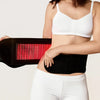
About three and a half inches lost across waist, hips and thighs combined in two weeks, compared with about two-thirds of an inch in the placebo group. The trial used low-level red light.Jackson et al · Lasers in Surgery and Medicine · 2009
Pain Relief + Recovery
Joints, nerves, tendons and athletic recovery
Arthritis & joint pain
Knee pain kept falling after the sessions stopped. At the recommended doses, it bottomed out two to four weeks after the last session at about 32 points below placebo on a 100-point pain scale, and the benefit was still there twelve weeks on. The light seems to start something that then runs without it.Stausholm et al · BMJ Open · 2019
Back & neck pain
About four times as likely to report less pain than people using a dummy device, when the trials in long-term neck pain were combined. The relief was still measurable twenty-two weeks after the last session.Chow et al · The Lancet · 2009
Fibromyalgia
Less pain, fewer muscle spasms and less morning stiffness, plus fewer tender points, than the placebo group after two weeks of daily sessions in women with fibromyalgia. In a later trial, the difference was still there six months after treatment ended.Gür et al · Lasers in Medical Science · 2002
Tendon pain
The same recovery in a third of the time. In an Achilles tendon trial, everyone did the same strengthening exercises and half also had light. The light group reached at four weeks what the exercise-only group reached at twelve.Stergioulas et al · American Journal of Sports Medicine · 2008
Carpal tunnel
The swollen nerve physically shrank on ultrasound, so you can actually watch the compression ease. Fifteen sessions of red light over the wrist also improved symptoms, hand function and the speed of the nerve's signal.Turkish Journal of Physical Medicine and Rehabilitation · 2022
Neuropathy & foot sensation
More blood reaching the skin of the feet, plus less pain and faster nerve signals, while nothing moved in the placebo group. Feeling in the feet is what people want back, and in a separate trial returning vibration sense was still there three months on. The treatment was near-infrared light on the lower back and soles, three times a week for a month.Journal of Advanced Research · 2011
Athletic recovery
Light works better before training than after it. Athletes treated beforehand had less creatine kinase in their blood the next day, the marker that tells you how much muscle got torn, and less soreness with it. It's one of the most useful findings in the sports research.Ferraresi, Huang & Hamblin · Journal of Biophotonics · 2016
Muscle fatigue
More reps before failing. Light on the thighs before training let people keep going longer, and fatigue resistance is the outcome that moves most reliably across these trials. The muscle is handed more available energy before the work starts, rather than being patched up after it.Ferraresi, Huang & Hamblin · Journal of Biophotonics · 2016
Bone density
Bone density rose at the hip and forearm after eight weeks, and was still higher seven weeks later. In this trial with spinal cord injury patients, one side of the body had near-infrared light three times a week and the other side didn't. The knee and shin didn't change.Mohammadzadeh et al · 2024 · spinal cord injury osteoporosis trial
Cognitive Wellness + Mood
Focus, memory, mood, sleep and brain injury
Focus & memory
Better attention and working memory after a single session, compared with a sham. Near-infrared light was aimed at the forehead, over the part of the brain that holds things in mind and decides what to focus on. In older adults, seven daily sessions improved working memory further, and the gain was still there three weeks later.Barrett & Gonzalez-Lima · Neuroscience · 2013
Brain oxygen & clear thinking
More oxygen in the front of the brain, and the bigger the rise, the better people did on thinking tests. Near-infrared light was aimed at the prefrontal cortex while both were measured, which offers one likely explanation for the clearer thinking reported in this research.Holmes et al · Frontiers in Neuroscience · 2019
Depression
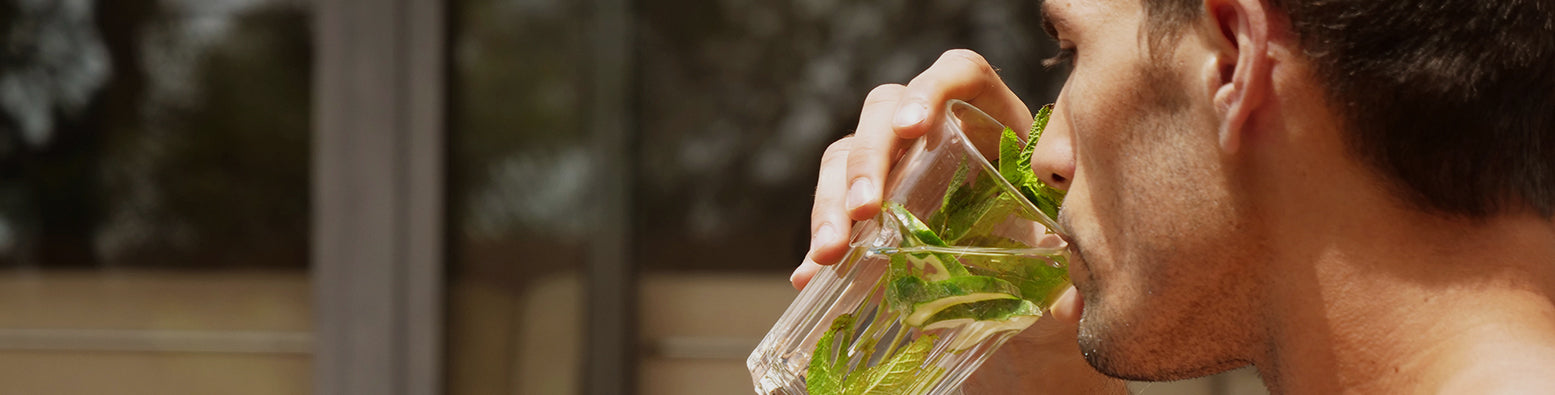
Depression symptoms improved across controlled trials. This isn't the light box used for winter blues, which works through the eyes and the body clock. Here the light is aimed at the forehead and reaches the front of the brain directly.
One visit
Six of ten people with major depression were in remission two weeks after a single visit, and most of the benefit held at four weeks. Each had four four-minute exposures to the forehead.Schiffer et al · Behavioral and Brain Functions · 2009
Eight weeks of it
Depression scores fell further than with a dummy device. People had light to the forehead twice a week, alongside the treatment they were already on.Cassano et al · Photomedicine and Laser Surgery · 2018
All the trials together
Combining every controlled trial up to 2023, light to the head improved depression symptoms.Ji et al · Frontiers in Psychiatry · 2024
Dose decides
A low-power headband worn daily at home for eight weeks improved sleep but not mood. The same idea at a lower intensity behaves like a different treatment.Guu et al · Journal of Affective Disorders · 2024
Why the forehead
Three things go wrong in a depressed brain at once: the front of it uses less energy, gets less blood and runs inflamed. Light aimed there improves all three at the same time, which is unusual, because most treatments address one.Cassano et al · Neurophotonics · 2016
Anxiety
Seven of ten people in remission on the anxiety scale, from one visit. Ten people had four four-minute exposures of near-infrared light to the forehead in a single appointment, and nine of them had anxiety alongside depression. Two weeks later seven were in remission, and most still were at four weeks.
Two details make it stranger. The lift was measurable within minutes of each exposure, rather than building over weeks. And it depended on which side of the forehead was lit, according to which side carried each person's more positive emotional tone. Blood flow at the front of the brain was recorded rising while it happened. A later study in generalized anxiety found the same direction.Schiffer et al · Behavioral and Brain Functions · 2009
Sleep quality
Better sleep scores and higher melatonin after two weeks of 30-minute whole-body red light sessions each night, compared with their own starting point and a control group. The study was small, in elite female basketball players, and their twelve-minute run performance also improved.Zhao et al · Journal of Athletic Training · 2012
Concussion & brain injury
Sharper executive function, better verbal memory and about an extra hour of sleep a night in veterans who had concussions years earlier. They had red and near-infrared LEDs on the scalp. Some who stopped went back to treatment when the gains faded.Naeser et al · Journal of Neurotrauma · 2014
Parkinson's
Balance, walking, fine movement and mood all improved when light was added to usual care, delivered to the head and through the nose. People who kept going reported gains that lasted for years at follow-up. This is early clinical work and doesn't replace standard Parkinson's care.BMC Neurology · 2024
Hormones, Gut + Inflammation
Thyroid, swelling, hormones, gut health and inflammation
Thyroid (Hashimoto's)
Far less thyroid medication needed to keep hormone levels normal. This is one of the stronger small clinical results on this page. In a randomized placebo-controlled trial, people with Hashimoto's-related hypothyroidism had ten sessions of near-infrared light and were followed for nine months, and the treated group needed far less levothyroxine on average than the placebo group.Höfling et al · Lasers in Medical Science · 2013
Lymphedema (limb swelling)
Swollen arms got smaller with light than with a dummy device, across trials in people after breast cancer surgery. One well-run trial also found less pain. The swelling happens because surgery removes part of the arm's drainage route, and it can last for years.Baxter et al · BMC Cancer · 2017
Testosterone (lab research)
Testosterone-producing cells made more testosterone under red light in laboratory studies. Testosterone is assembled inside mitochondria, and the cells that make it are unusually rich in them, because building the hormone from cholesterol takes a lot of energy.Alavi et al · Andrologia · 2022
Gut microbiome
Light on the abdomen changes which bacteria live in your gut. In a woman treated over eleven weeks, Akkermansia, Faecalibacterium and Roseburia, three of the bacteria most associated with a well-sealed, low-inflammation gut lining, all rose. People with Parkinson's given twelve weeks of it showed the same shift, plus more of the short-chain fatty acids gut bacteria make to feed the cells of the colon. In mice, near-infrared on the belly shifted the balance more than red did.
The light is almost certainly not reaching the bacteria directly. What it reaches is the gut wall, and changes there may alter the environment that shapes the microbial community. Researchers named the field photobiomics in 2019. So far it's animal work, one case and a look back at existing patients, and nobody has run it against a dummy device yet.Bicknell et al · Journal of Personalized Medicine · 2022
Whole-body inflammation
Of everything red light does, lowering inflammation is the effect that repeats most reliably across tissues, species and study designs. It's the same shift in immune signaling whether the target is a knee, a scalp or a psoriasis plaque, and it's the thread running under most of this page.Hamblin · AIMS Biophysics · 2017
Eyes + Clinical Care
Vision, eye health and supportive cancer care
Eyesight & color vision
Color vision improved in people over forty, especially with morning light. This is one of the fastest-moving areas on this page, and timing appears to matter enormously.
Morning only
Faint color discrimination improved for a week after three minutes of deep red light between 8 and 9 a.m. The same dose at midday did nothing.Shinhmar et al · Scientific Reports · 2021
Over forty only
Color contrast improved by up to a fifth after three minutes a day for two weeks, mostly in the blue-yellow range that fades first. People under forty saw no change, because there was nothing yet to restore.Shinhmar et al · Journals of Gerontology · 2020
Why the eye
The retina is one of the most energy-hungry tissues in the body, and its light-sensing cells are packed with mitochondria. That's one reason retinal function is sensitive to mitochondrial decline with age.Kaynezhad, Tachtsidis & Jeffery · Experimental Eye Research · 2016
Nearsightedness in children
Fewer than one in fifty children who weren't yet nearsighted became so, against one in eight without treatment. This larger field uses a device that shines red light into the eye twice a day. Nearsightedness happens when the eyeball grows too long, and over six months treated eyes got slightly shorter while untreated eyes lengthened.Myopia control trial · Ophthalmology and Therapy · 2022
And in adults
Eyes measured about six hundredths of a millimeter shorter after four weeks of three minutes twice a day, and the blood-vessel layer behind the retina thickened. The untreated group didn't change. The adult eye was thought to be fixed, though the long-term trials are all still in children.Liu et al · Journal of Clinical Medicine · 2022
The open question
Because this treatment shines light into the eye, it's different from red light on the skin. Most trials haven't reported serious side effects, but long-term retinal safety is still being studied. A 2026 case report described fluid under the retina and mild vision loss after prolonged use, which partly improved once treatment stopped. Light aimed into the eye belongs under an eye doctor's supervision, with retinal monitoring.Lin et al · Clinical & Experimental Ophthalmology · 2026
Macular degeneration
About six more letters read on the eye chart at twenty-one months, in early dry macular degeneration, a condition where vision is expected to go one way only. Six in ten treated eyes gained at least five letters, more than one in five gained ten, and fewer went on to the advanced form. Treatment was nine sessions every four months, using three wavelengths at once.LIGHTSITE III · Retina · 2024
Mouth sores during cancer care
Severe mouth sores happen less often, last less time and hurt less when light is used during cancer treatment, which can strip the lining of the mouth raw. This is where red light has traveled furthest into mainstream medicine: it's now part of international supportive-care guidelines, which almost nothing else in this field has achieved.Systematic review · Supportive Care in Cancer · 2023





























 Skin & fine linesRed Light Therapy Mask
 Hair & scalpLaser Cap
 Body contouringLipoWrap
 Knees & jointsKnee Wrap