She's done everything right, at least by the rules we were all handed.
She knows the calories in a banana without looking. She's done the 6am spin classes, the cleanses, the plan her sister swore by and the one before that. For years, it more or less worked. Then, somewhere in her late thirties or forties, it simply stopped. Now she eats less than she ever has, trains harder than ever, and her body holds on to every bite like it's the last meal on earth.
She's cold all the time. Tired all day, wide awake at 2am. Her hair is thinning, her cravings are fierce, and her patience is gone.
If that sounds like you, here's the good news: your body isn't simply working against you. It's responding to the signals it's been given. It may just need a different message.
Your body hears signals, not intentions
Your body has no idea you're on a diet. It can't tell skipping lunch apart from food running out, or a brutal week at work apart from real danger. What it reads is the signal: too little fuel, hard exercise day after day, short sleep, and stress that never switches off.
Put those together for long enough and your body adapts. Metabolism can slow. Stress hormones rise. Your system becomes increasingly efficient with the energy it has available. It's survival biology, and it's remarkably good at its job.
The science on this is fascinating.
Dieting raises your stress hormone
In a 2010 study published in Psychosomatic Medicine, researchers put 121 women on different eating plans for three weeks. Some cut calories, some tracked everything they ate, some did both, and some did neither.
Cutting calories raised the women's cortisol, the body's main stress hormone. And simply tracking food made women feel more stressed, even when they weren't eating less.
For women who have spent years restricting, tracking, and pushing harder, that matters. The very strategy meant to create more control can become another source of physiological and psychological stress.
The metabolism remembers
When the National Institutes of Health followed contestants from The Biggest Loser six years after their extreme diets and marathon workouts, their resting metabolism was still about 700 calories a day below where it started. Even accounting for their smaller bodies, they were burning roughly 500 fewer calories a day than expected.
That's metabolic adaptation at work. Push the body into a large energy deficit hard enough and long enough, and it can become remarkably efficient at running on less.
Sleep decides what you lose
In a study in the Annals of Internal Medicine, people followed the exact same reduced-calorie diet twice, once sleeping eight and a half hours a night and once sleeping five and a half.
On short sleep, fat loss dropped by 55% and muscle loss increased substantially. Same food, same calories. The difference was sleep — and whether the weight being lost came primarily from fat or from the lean tissue that helps keep metabolism strong.
The signs your body is in save mode
Eating very little while the scale refuses to move. Cold hands and feet. Exhausted all day, wired at night. Shedding hair. Cravings that feel louder than ever (we dig into those in our post on cravings in your 40s). Workouts that drain you instead of lighting you up. A shorter fuse. A cycle that's gone a little off-script.
Recognize a few of these? Then cutting more probably isn't the answer. Your body may need a very different signal: enough nourishment, enough recovery, and a nervous system that isn't being asked to stay on high alert all day.
How to send that signal
Feed it, and feed it well. Real meals, starting with breakfast. Protein at every one, plenty of vegetables, good fats, and carbs too. A body that's consistently fed doesn't have to keep responding to repeated restriction. If you've been dieting for years, "enough" may be more than you think, and a women's health dietitian can help you find it.
Drop the tracker. The research suggests that tracking itself can increase perceived stress. Pay attention to the things that actually show your body is doing better: warmer hands, steadier energy, deeper sleep, strength, and how your clothes fit.
Lift and walk more, grind less. Swap some of the punishing cardio for strength training a few times a week and long, easy walks. Muscle is metabolically active tissue, and walking gives you movement without turning every day into another hard training session.
Calm your nervous system with light and frequency. This is the step many women skip. You can understand stress intellectually and still have a body that feels like it's permanently switched on. Creating physical cues for rest and recovery matters.
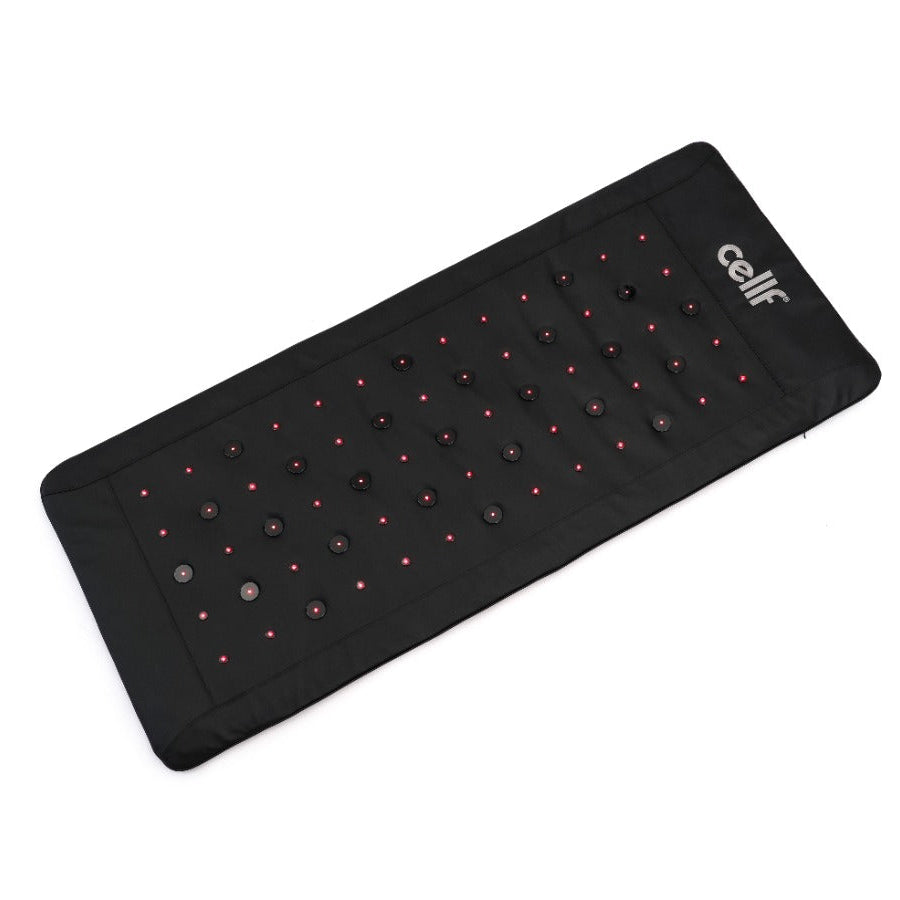
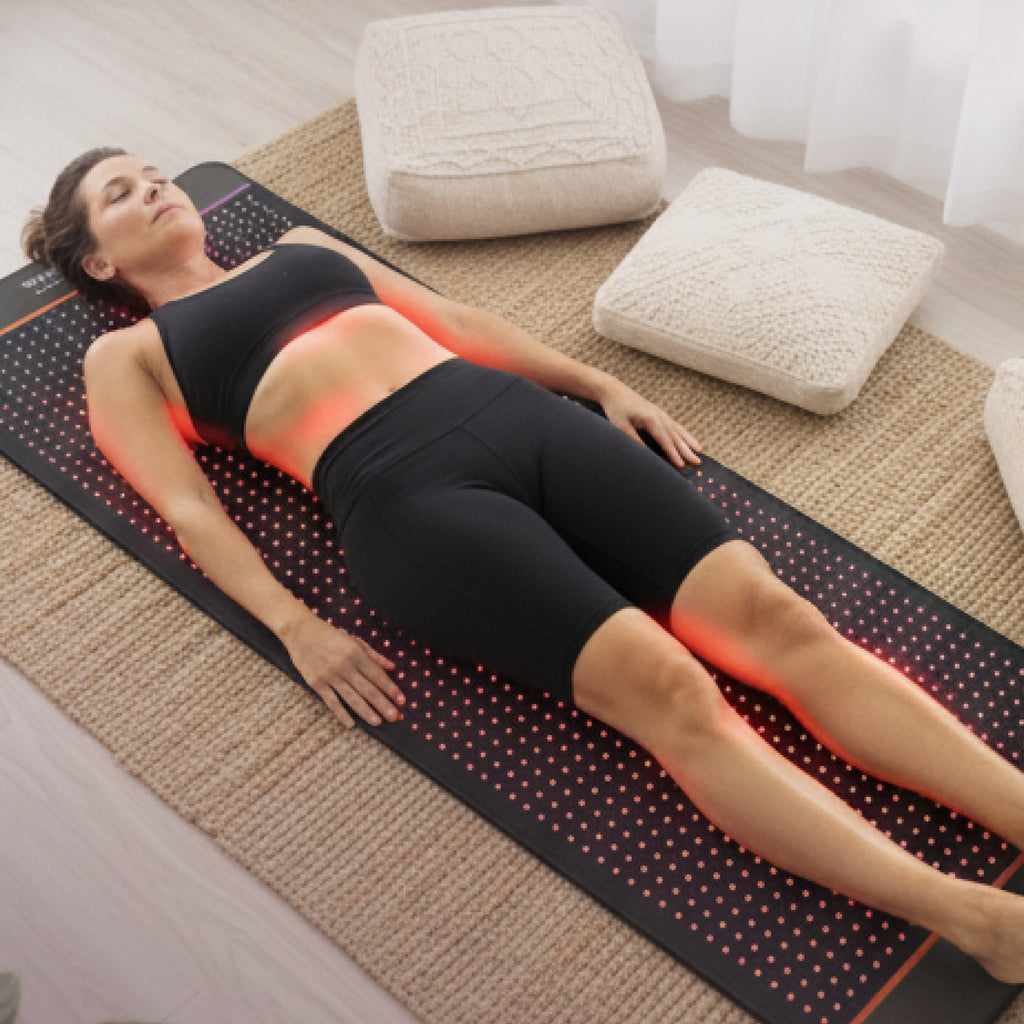
That's exactly what the Cellf Multi-Therapy Mat was created for. It surrounds your whole body with three complementary wellness modalities at once:
-
Full-body PEMF from 25 coils, with a Relax & Restore program designed for low-frequency evening sessions and a Schumann resonance setting at 7.83 Hz
-
660nm red and 850nm near-infrared light, wavelengths widely used in photobiomodulation research to support cellular energy and recovery
-
Soothing infrared heat to help relax tight, tired muscles
Twenty minutes on Relax & Restore with gentle heat in the evening creates a simple physical cue that the day is over and it's time to downshift.
Recover with red light. On strength days, the LipoMat in Mode 2 uses a gentle 10 Hz pulse of 635nm red and 850nm near-infrared light as part of a post-training recovery routine, helping you stay consistent with the strength work that supports your metabolism.
Make sleep sacred. If sleep can influence whether you preserve lean tissue while losing weight, it deserves the same attention as anything on your plate. Aim for seven to nine hours, dim the lights after sunset, and keep your phone out of the bedroom. Our red light before bed post has a beautiful wind-down to borrow.
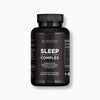
For nights when your mind won't quiet down, Sleep Complex: Dreamstate Formula supports a restful nighttime routine without melatonin. It's made with magnesium glycinate, GABA, L-tryptophan, apigenin, and a calming blend of lemon balm, chamomile, valerian, hops, and passionflower. Take two capsules 30 minutes before bed, right after your session on the mat, and let the two become part of the same evening ritual.
The 30-day reset
Every evening for the next month:
-
Eat a real, satisfying dinner with protein, vegetables, and carbs
-
Spend 20 minutes on the Cellf Multi-Therapy Mat on Relax & Restore with gentle heat
-
Take Dreamstate 30 minutes before bed
-
Lights low, screens off, in bed early enough for at least seven hours
No counting, no punishment workouts. Instead, watch for the early signs that your system is doing better: warmer hands, calmer afternoons, quieter cravings, deeper sleep, and better energy. Those changes often matter long before anything dramatic happens on the scale.
Your body has spent years adapting to every diet and every stressful season. Give it nourishment, movement, light, recovery, and rest, and see what changes when you're no longer asking it to survive on less.
If food or your body has started to feel like a constant battle, please reach out to a doctor, dietitian, or therapist who specializes in eating and body image. You deserve real support.
Shop the Cellf Multi-Therapy Mat | Shop Dreamstate | Shop the LipoMat
The Fine Print (Yes, We Have to Say It)
We read the studies so you don't have to, but sharing research about light, the body, and wellness now comes with a mandatory footnote, thanks to the big tech giants. So here it is: this article is for educational purposes only and is not medical advice. Our devices are wellness tools, not medical devices, and are not intended to diagnose, treat, cure, or prevent any disease. Results vary from person to person. Please check with your healthcare provider before starting anything new, especially if you're pregnant, nursing, managing a health condition, or taking medication. Now go forth, stay curious, and get some good light.
These statements have not been evaluated by the Food and Drug Administration. This product is not intended to diagnose, treat, cure, or prevent any disease.