I was comparing PEMF mats and therapy devices recently and couldn't help noticing how enormous the price differences are. Some full-body PEMF systems cost under $2,000, while others approach $10,000, complete with tablets, extensive frequency libraries, guided audio sessions, and personalized wellness programs. The presentations are impressive, but I started wondering how much of that price reflects the actual technology and how much is the experience built around it.
It's an important distinction, particularly when some of the most expensive systems don't necessarily publish the most impressive hardware specifications.
What Actually Matters in a PEMF Device?
At its core, pulsed electromagnetic field (PEMF) therapy uses coils to generate changing magnetic fields. The technology can be described through measurable specifications: magnetic strength (Gauss), frequency (Hz), waveform, and the number and placement of coils.
What's interesting is how differently manufacturers present these numbers. Some expensive systems publish relatively modest magnetic field strengths, while more affordable devices advertise considerably higher output. That doesn't automatically make one more effective than the other, because PEMF research hasn't established a single ideal intensity or frequency for every application. But it certainly makes you wonder what accounts for such enormous price differences.
Even the measurements themselves can be misleading. A peak reading directly above a coil isn't the same as a measurement taken several inches away, and not every manufacturer tells you how its numbers were obtained. If we're spending thousands on electromagnetic technology, shouldn't we at least know what the equipment actually delivers?
Are Hundreds of PEMF Frequency Programs Really Necessary?
This is where I think some companies have become exceptionally good at marketing. Rather than focusing on the hardware, they've created entire experiences around PEMF, complete with sound journeys, guided relaxation, personalized programs, and hundreds of frequency combinations.
And I understand the appeal. Most people don't necessarily want to learn about waveforms or magnetic field intensity. They want to turn on a device, select a program, and feel confident they're doing something beneficial for themselves. Good software can make that experience much more enjoyable and encourage people to use their equipment consistently.
But there's a difference between an enjoyable experience and better therapeutic technology. Having 150 frequency programs doesn't mean the device is more effective than one with a handful of well-designed settings. There's limited clinical evidence supporting the idea that extensive libraries of frequencies assigned to specific wellness goals produce superior results.
You're often paying for the programming and the experience surrounding the technology, not necessarily more advanced electromagnetic hardware.
What About Multi-Therapy PEMF Mats?
Another approach is to invest in more actual technology rather than more ways to program a single therapy.
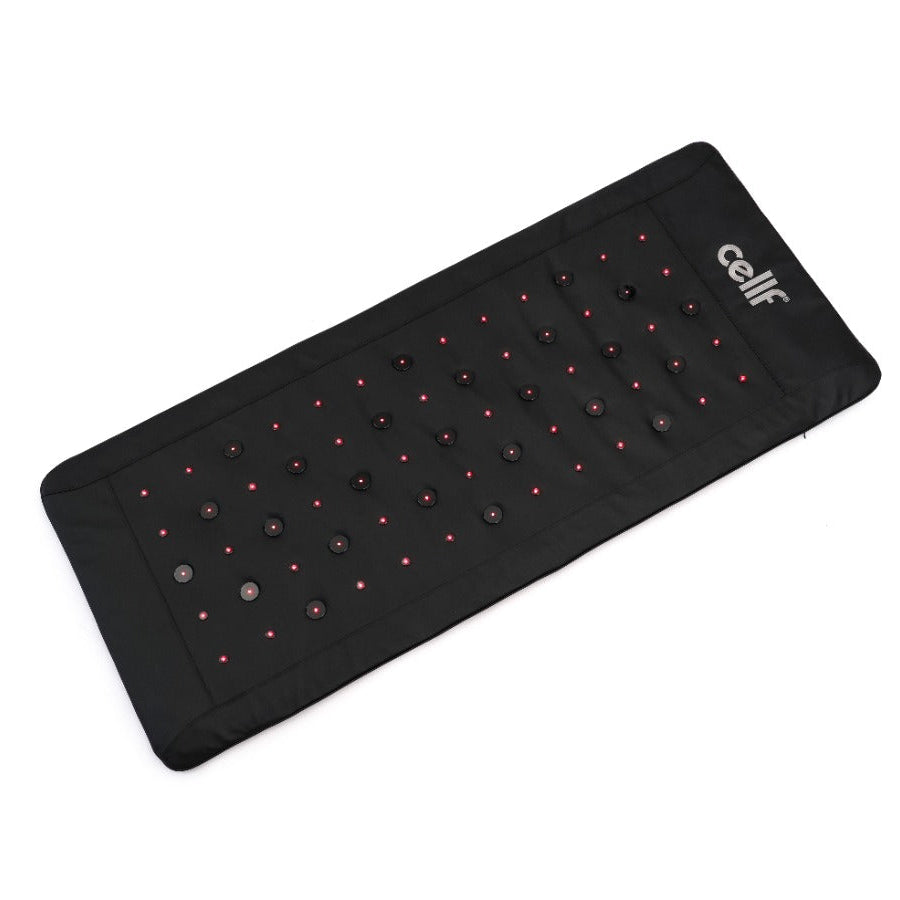
That's the direction we've taken with our CELLF Multi-Therapy Mat. It combines 25 distributed PEMF coils, 660 nm red and 850 nm near-infrared LEDs, and adjustable infrared heat in one full-body mat. Each therapy can be used independently or together, depending on what you're looking for that day.
In fact, I was so excited about the 25-coil design that I wanted the coils visible on the outside of the mat rather than hidden away inside it. I wanted people to actually see the technology they're investing in. Although I can certainly understand the appeal of hiding the coils when you've only got four to show.
CELLF's published specifications include localized peak magnetic field intensity up to 34.6 Gauss, adjustable frequency settings, and a square-wave PEMF system. At $1,899, it offers three distinct wellness technologies in one device, rather than concentrating the investment on a single modality and an elaborate software platform.
I'm not suggesting that combining therapies automatically makes them more effective, or that higher Gauss always means better results. But there's something to be said for the practicality of having 25 distributed coils alongside red light therapy and infrared heat, especially when you're comparing that against systems costing four or five times as much.
So, Are Expensive PEMF Devices Worth It?
I think that depends entirely on what you value. There's certainly an appeal to beautifully designed software, guided sessions, and personalized frequency programs. And if those things make you more likely to use your device, they have value.
But I also think consumers deserve to understand what they're paying for. When a system costs $8,000 or $9,000, I'd want to know how its magnetic output compares, what the coil configuration looks like, and whether there's evidence that its additional programming produces better results.
What surprised me most while researching these devices was how much the price can reflect the experience surrounding the technology rather than the measurable hardware itself. Some companies have done an exceptional job of making relatively straightforward technology feel incredibly sophisticated.
There's nothing wrong with a great user experience. But when you can get a full-body PEMF mat with 25 coils, integrated red and near-infrared light therapy, and infrared heat for under $2,000, I think it's perfectly reasonable to ask what the additional thousands are actually buying you.
Frequently Asked Questions
Why are some PEMF devices so expensive?
Some premium PEMF systems include proprietary software, personalized frequency programs, guided audio, and additional accessories. These features contribute to the price, but don't necessarily mean the device delivers a stronger magnetic field or better therapeutic performance. It's worth comparing the actual hardware specifications before deciding whether the additional cost is justified.
Do more PEMF frequency programs mean better results?
Not necessarily. A device offering 150 frequency programs isn't automatically more effective than one offering a smaller selection. Frequency is an important part of PEMF therapy, but the number of programs available doesn't establish their clinical effectiveness. What matters is the electromagnetic output and whether the treatment parameters are appropriate for their intended application.
Does higher Gauss mean a better PEMF mat?
Magnetic field strength is an important specification, but it needs to be considered alongside frequency, waveform, coil placement, and treatment coverage. A higher Gauss rating doesn't automatically guarantee better results, and comparisons can be misleading when manufacturers measure output at different distances or use different reporting methods.
Is a PEMF mat with red light therapy and infrared heat worth it?
For anyone interested in multiple wellness technologies, a multi-therapy PEMF mat can be a particularly practical investment. Instead of buying separate equipment for PEMF, red and near-infrared light therapy, and infrared heat, you can have all three available in one full-body system. CELLF combines these modalities with 25 distributed PEMF coils, and each therapy can be used independently or together.
Explore the CELLF Multi-Therapy Mat