Twice the irradiance. A similar amount of light hardware. Almost 30× the price.
We have been developing red light therapy devices for more than a decade. When we see a commercial full-body red light therapy bed selling for almost $60,000, the first thing I want to evaluate is what’s actually inside it.
Not the acrylic shell, touchscreen interface, or how impressive it looks sitting inside a high-end wellness clinic.
The light.
-
The Spectra S5 Pro currently sells for $59,990. Its published specifications list 2,592 LED chips, five wavelengths, and a surface irradiance of 32 mW/cm². The machine weighs 390 pounds and requires a dedicated 240V/30A electrical supply.
-
The NuShape Body Pod is $1,999. It uses 1,600 physical triple-chip LEDs, creating 4,800 individual emitting light points with 635 nm and 660 nm red light plus 850 nm near-infrared. Its surface irradiance is 16 mW/cm². It weighs eight pounds and folds flat when you’re finished.
Yes, the $60,000 machine delivers twice the surface irradiance.
It does not deliver 30 times the irradiance, 30 times the LEDs, or 30 times the wavelengths.
Yet it costs almost 30 times more. That is the engineering gap worth examining.
What Are You Actually Paying For?
A commercial hard-shell red light therapy bed price looks inherently higher because the machine itself is enormous. It incorporates heavy acrylics, fans, electrical infrastructure, control systems, and hundreds of pounds of physical structure built around the LEDs.
But that outer structure isn’t what your cells respond to. They respond strictly to light energy.
Photobiomodulation (PBM) relies on a combination of wavelength, irradiance, treatment duration, total dose, and tissue proximity. More raw power isn't inherently superior, either. Clinical photobiology research documents a clear biphasic dose response—meaning both under-dosing and over-dosing light can yield sub-optimal biological outcomes compared to an appropriate, targeted dose.
Red Light Therapy Bed vs. Body Pod: Technical Specifications
|
Feature / Metric |
Spectra S5 Pro |
NuShape Body Pod |
|
Price |
$59,990 |
$1,999 |
|
Surface Irradiance |
32 mW/cm² |
16 mW/cm² |
|
Light Source |
2,592 LED chips |
1,600 triple-chip LEDs (4,800 light points) |
|
Wavelengths |
528 / 630 / 660 / 810 / 850 nm |
635 / 660 / 850 nm |
|
Weight |
390 lbs |
8 lbs |
|
Electrical Supply |
Dedicated 240V / 30A |
Standard 24V / 10A Adapter |
|
Footprint / Inches |
84 × 40 × 44 |
64 × 53 (Unfolded) |
|
Storage / Portability |
Permanent heavy installation |
Folds completely flat |
Note on LED terminology: Spectra reports individual single-chip LEDs, while the Body Pod uses 1,600 physical triple-chip LED modules housing 4,800 emitting light points.
The Spectra gives you 2× the surface irradiance for almost 30× the price. Its 2,592 LED chips are not remotely 30 times the physical light hardware inside the Body Pod.
So the core question becomes: how much are you paying for incremental light specifications, and how much are you paying for the 390 pounds of machine surrounding them?
Why Wearable Phototherapy Changes Everything
This precise dilemma is why NuShape started.
When I first began developing red and low-level light therapy devices, almost all full-body technology lived inside massive commercial equipment. If you wanted a treatment, you had to travel to the machine.
I kept thinking: Why shouldn't the light come to you? Why couldn't it rest directly against the tissue instead of requiring the body to lie inside a rigid shell? Why did an LED-based system need to weigh 390 pounds?
That line of thinking led to wearable red light therapy, culminating in our full body red light therapy pod.
We weren’t trying to build a budget imitation of a $60,000 bed. We asked a more fundamental question: Why does it need to be a bed at all?
Removing the Rigid Shell: Bringing the Light to the Body
Traditional beds suspend LEDs in a fixed outer frame, positioning your body inches away from the light source.
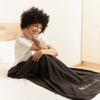
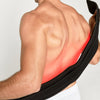
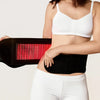
The NuShape Body Pod uses two flexible light panels that contour around the body. Each panel contains 800 triple-chip LEDs, delivering 1,600 physical LEDs and 4,800 light points across a full body red light therapy layout. The system includes five intensity levels, continuous, 10 Hz, and 40 Hz pulse modes, and adjustable 10–60 minute session timers.
Flexible panels aren't biologically superior simply because they bend—that would be as oversimplified as claiming higher irradiance automatically wins. What flexibility changes is practical delivery: you can distribute thousands of emitting light points across the body without needing a 390-pound frame to hold them there.
EXPLORE THE NUSHAPE BODY POD →
Comparing 32 mW/cm² vs. 16 mW/cm² Irradiance
Irradiance measures the light power delivered over a specific surface area at any given moment.
-
The Spectra publishes 32 mW/cm² at the surface.
-
The Body Pod delivers 16 mW/cm² at the surface.
While the Spectra’s surface output is twice as high, that does not mean it yields twice the biological benefit.
Irradiance and treatment time work together to calculate total energy dose (J/cm2). Research in photobiomodulation confirms that lower irradiance applied over a slightly longer session delivers equivalent cellular dosing without crossing the threshold into photothermal saturation or a biphasic plateau.
Scientifically, declaring a 32 mW/cm² bed "twice as effective" as a 16 mW/cm² pod is inaccurate. Commercially, the numbers demonstrate that twice the surface output does not justify a 30× price hike.
Five Wavelengths vs. Three Wavelengths
The Spectra uses five wavelengths: 528, 630, 660, 810, and 850 nm.
The Body Pod uses three: 635, 660, and 850 nm.
On paper, five sounds superior to three. But wavelength selection should be guided by targeted biological mechanisms rather than specs padding.
For NuShape, 635 nm was a deliberate choice based on extensive clinical body-contouring literature:
-
In a double-blind, randomized, placebo-controlled study of 67 adults, six treatments using 635 nm low-level light over two weeks yielded a statistically significant reduction in combined waist, hip, and thigh circumferences versus sham treatment (averaging a 3.51-inch reduction).
-
A separate randomized sham-controlled trial evaluating 635 nm light on upper arms showed similar significant circumference reductions compared to control groups.
While clinical trial protocols used specific laser arrays rather than LED pods, the data confirms why 635 nm was selected alongside 660 nm deep red and 850 nm near-infrared light.
De-coupling the Light from the Heavy Machinery
We naturally associate heavy, complex, clinical equipment with superior power. When equipment arrives on a freight pallet, requires a dedicated 240V circuit, and weighs 390 pounds, we assume it performs miracles.
When a device folds flat into a carrying case, we assume compromises were made.
Sometimes that’s true. Sometimes it simply means an engineer removed the bulky infrastructure that wasn't actually emitting light.
The Practical Economics of Ownership
Most consumers aren't deciding whether to buy a $60,000 bed for their home. The real decision is between owning a red light therapy bed for home use versus paying repeatedly at a commercial spa.
At $50 to $75 per clinical session:
-
3 sessions per week = $7,800 to $11,700 per year in ongoing costs.
That total omits the hidden costs: driving, parking, appointment scheduling, and lost time.
At $1,999, the NuShape Body Pod lets you unfold a clinical-grade full-body system in your bedroom, run a session, and fold it away when finished. Consistency drives photobiomodulation results—and a device ten feet from your bed gets used far more consistently than a machine across town.
Summary: What the Data Shows
|
Feature |
$59,990 Commercial Bed |
$1,999 NuShape Body Pod |
|
Light Hardware |
2,592 LED Chips |
1,600 Triple-Chip LEDs (4,800 Light Points) |
|
Output |
32 mW/cm² |
16 mW/cm² |
|
Wavelengths |
5 Wavelengths |
3 Targeted Wavelengths (635/660/850nm) |
|
Weight & Form |
390 lbs (Permanent) |
8 lbs (Folds Flat) |
The Spectra delivers higher surface irradiance, but the hardware gap is roughly 2×—not 30×.
One approach encases the LEDs inside a $60,000 permanent bed. We kept the light and eliminated the machine.
Experience Full-Body Phototherapy Without the $60,000 Price Tag
The NuShape Body Pod surrounds your body with 635 nm, 660 nm, and 850 nm light via 1,600 triple-chip LEDs and 4,800 emitting light points. Delivering 16 mW/cm² surface irradiance, 5 intensity levels, and multi-frequency modes in an 8-pound foldable format.