Where It Begins · The Circadian Connection
The morning light your grandmother
sat in every day — there was science in that.
At sunrise and sunset, the light spectrum shifts. Blue wavelengths scatter. What reaches your skin in those golden hours is dominated by red and near-infrared light — the same wavelengths your mitochondria evolved over millions of years to absorb and convert into cellular energy.
Every Mediterranean grandmother who spent her mornings on a sun-warmed terrace was doing photobiomodulation. She called it having her coffee outside. The ritual was the same — the biology behind it is what we now understand.
Red light therapy is the precise replication of what sunrise and sunset were always doing for your cells — available on your schedule, targeted to the tissue that needs it most.
Your biology expects red and infrared light at the beginning and end of every day. When modern life moved indoors, that signal got lost. This is how you restore it.
Free — Available Right Now
10 min outside at sunrise — no sunglasses
Evening outdoors at golden hour
Candle or firelight after sunset
Avoiding blue screens after 8pm
Letting sunset light hit your skin directly
Upgraded — Precise & Targeted
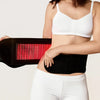
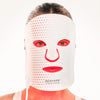
NuShape Lipo Wrap — 630nm + 850nm, wearable
Cellf Multi-Therapy Mat — red light + near-infrared, full body
Targeted tissue delivery — any area, any time
Consistent therapeutic dose regardless of weather
Measurable outcomes — tracked with HRV and recovery
Start Here · How to Use It Today
1
Evening is your most powerful session — it works with your circadian rhythm
Unlike blue light which suppresses melatonin, red and near-infrared wavelengths are precisely what your body expects after sunset. 15–20 minutes of red light in the evening actively signals melatonin production — the body's most potent antioxidant — and primes the overnight repair cascade before you close your eyes. Your biology already knows what to do with this light. You're just providing what the modern indoor world took away.
Evening use · Circadian-aligned · Supports melatonin · 15–20 min
2
Distance determines depth — closer for surface, further for deeper tissue
Red light works best at 10–20cm — skin, collagen, surface tissue. Near-infrared penetrates deeper and remains effective at 20–50cm — reaching muscle, joint, and beginning to reach cortical brain tissue. No heat required for therapeutic effect. The light is doing the work invisibly at the cellular level.
Red light — close range · Near-infrared — deeper tissue
3
Consistency over intensity — daily 10 minutes outperforms weekly 60
Photobiomodulation works through cumulative cellular signalling. Daily 10–20 minute sessions produce significantly better results than occasional longer sessions. The cells need consistent light signals to maintain mitochondrial activation and sustained nitric oxide production. Treat it like morning sunlight — not a monthly spa treatment.
Daily 10–20 min · Consistency is the protocol
This is not heat therapy. It is not UV. It is specific photons absorbed by specific enzymes that drive energy production in every cell they reach.
I
The Science
The Two Wavelengths — What Each One Does
Red light and near-infrared are the two wavelength ranges used in therapeutic photobiomodulation. Both correspond to absorption peaks of cytochrome c oxidase — the mitochondrial enzyme that converts light into ATP. The difference between them is penetration depth, which determines primary application.
Wavelength
Penetration
Primary Effect
Red Light
630–680nm range
Surface tissue — skin, scalp, fascia, collagen layer, subcutaneous fat
Collagen synthesis · wound healing · skin tone · inflammation reduction · scalp and hair follicle activation · fat metabolism support
Near-Infrared
810–850nm range
Deep tissue — muscle, joint, bone, beginning to reach cortical brain tissue
Deep inflammation · muscle recovery · joint repair · cognitive support · nitric oxide release · transcranial application
The mechanism is direct: photons at these wavelengths are absorbed by cytochrome c oxidase — an enzyme inside the mitochondria — which then produces more ATP and releases nitric oxide. More ATP means more energy available for every cellular process. Nitric oxide causes vasodilation — measurably improved blood flow to treated tissue within minutes.
This is not theoretical. Red light therapy has over 5,000 peer-reviewed studies behind it. The mechanism is documented, measurable, and repeatable — which is why it is used in clinical settings for wound healing, joint rehabilitation, neurological support, and pain management worldwide.
II
Circadian Timing
When You Use It Matters as Much as How Long
Your body has a master clock — the suprachiasmatic nucleus — that orchestrates every biological process around the 24-hour light cycle. Red light therapy works best when it aligns with that clock. Morning sessions activate. Evening sessions restore. The circadian system amplifies the effect when the timing is right.
Morning
Activation & Cognitive Clarity
Morning red light activates mitochondria for the day and supports the cortisol rhythm. 5–10 minutes on face and head is a meaningful cognitive performance protocol — particularly effective for mental clarity and focus.
Aligns with natural red light at sunrise — reinforces the circadian morning signal
Pre-Workout
Performance & Injury Prevention
Red light before training increases ATP availability in muscle tissue and improves nitric oxide-driven blood flow. Reduces exercise-induced inflammation. 10–15 minutes on target muscle groups.
Most effective in morning or early afternoon — in alignment with natural cortisol peak
Post-Workout
Recovery & Repair
After training, red light accelerates muscle repair and reduces delayed onset muscle soreness. Most effective within 2 hours of training. Combine with PEMF for the most complete recovery protocol available.
Supports the body's natural afternoon repair window
Evening · Most Impactful
Sleep, Melatonin & Overnight Repair
The single most impactful daily use. 15–20 minutes of red light after sunset supports melatonin production, reduces inflammatory markers before sleep, and begins the overnight repair cascade. Safe up to an hour after sunset.
Mirrors the red-dominant light spectrum at sunset — the signal your biology uses to begin the transition to sleep
V
The Bigger Picture
Red Light as a Circadian Anchor
The modern indoor environment is largely blue-light dominant — screens, LED lighting, overhead fluorescents. This chronic mismatch between the light your body receives and the light it evolved to expect is one of the most significant and least discussed sources of systemic stress in contemporary life.
Red light therapy, used consistently, does two things simultaneously. It provides the wavelengths your cells are waiting for — triggering ATP production, collagen synthesis, and inflammatory resolution. And it signals your circadian system: morning sessions reinforce the wake cycle, evening sessions reinforce the sleep transition.
This is why timing matters as much as duration. The same 15-minute session produces meaningfully different outcomes depending on when you use it — not because the light is different, but because your biology is. In the morning your cells are primed for activation. In the evening they are primed for repair and melatonin production. The device is the same. Your circadian biology amplifies the effect.
III
Device Quality
Low Flicker — Why It Matters
Flicker is one of the most discussed quality differentiators in therapeutic red light devices — and one of the least understood. All LED-based devices flicker to some degree as the power supply cycles. The question is how fast, and whether it falls within a biologically disruptive range.
High-flicker LEDs — particularly those flickering between 3Hz and 70Hz — have been associated with eye strain, headaches, photosensitive reactions, and neurological stress in sensitive individuals. The effect is invisible to the naked eye but measurable. Consumer-grade devices frequently operate in this range.
Low-flicker or flicker-free devices operate above the threshold at which the nervous system perceives or responds to the cycling — typically above 1,000Hz, or with DC drivers that eliminate flicker entirely. For a therapy being used to support the nervous system, brain health, and sleep, the device delivering it should not simultaneously be introducing a disruptive flicker signal.
For a device used to support the nervous system and sleep, the quality of the light matters as much as the wavelength. Low flicker is not a luxury specification — it is a baseline requirement.
IV
Clinical Applications
What Red Light Therapy Has Been Used For
Photobiomodulation has been studied across an extraordinary range of conditions and applications. The following list draws from peer-reviewed research and clinical use. This is not a claims list — it is a reflection of what the science has explored.
Wrinkles & fine lines
Acne & rosacea
Wound healing
Scar reduction
Psoriasis & eczema
Stretch marks
Hair loss (alopecia)
Scalp health
Cellulite
Arthritis & joint pain
Back & neck pain
Fibromyalgia
Tendinopathy
Carpal tunnel
Neuropathy
Athletic recovery
Muscle fatigue
Bone density support
Cognitive function
Brain fog
Depression & SAD
Sleep quality
Thyroid support
Oral health & dental healing
Lymphedema
Testosterone support
TBI recovery support
Parkinson's symptom support
Macular degeneration support
Inflammation (systemic)
Research is ongoing · This list reflects areas of published study · Not medical advice
Exclusive retreat discount — valid on any NuShape or Cellf product at nushape.com
SOHOIBIZA
Red light therapy is one of the few interventions where the mechanism is clear, the studies are consistent, and the experience tends to match the science. Most people who use it regularly describe a quality of recovery and energy that is difficult to attribute to anything else — because the change happens quietly, at the cellular level.
NuShape × Soho House · nushape.com